Ragdoll Cat and Galaxy 20oz: A Designer’s Real-World Embroidery Review
First Impressions: Whimsy with Weight
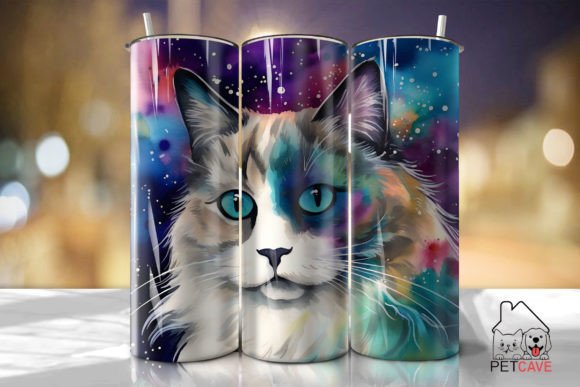
When I opened the Ragdoll Cat and Galaxy 20oz files, what struck me wasn’t just the charm—but the quiet intention behind it. The composition balances soft feline serenity (that gentle Ragdoll gaze, rounded ears, plush silhouette) with cosmic depth (swirls, stars, subtle nebula gradients). It’s not cartoonish or overly busy; instead, it feels like a lullaby stitched in thread—calm but visually rich. At 9.3” x 8.2”, it’s sized for impact without overwhelming. I immediately pictured it on a heavyweight organic cotton tote bag for a boutique launch: elegant enough for adults, tender enough for new parents.
Where This Design Truly Shines
- Custom apparel: On a charcoal crewneck sweatshirt, the galaxy backdrop grounds the cat’s softness—no clash, just cohesion. The tapered PNG version adapts beautifully to curved hems or sleeve placements.
- Baby embroidery: Think muslin swaddle blankets or knit rompers. The design’s gentle contours avoid sharp angles that could irritate sensitive skin, and its scale leaves room for delicate border stitching.
- Embroidered patch: As a sew-on or iron-on patch, the clean edges and balanced negative space mean crisp cutouts and minimal fraying—even after multiple washes.
- Holiday or nursery decor: On a linen pillow cover or framed hoop art, it reads as intentional, not kitschy. Customers respond to that authenticity—it feels handmade, not mass-produced.
- Etsy seller asset: Paired with a printable mockup, this design elevates your shop’s perceived value. Buyers scroll past generic cats; they pause for something that tells a story—like a Ragdoll drifting through stardust.
Real-World Stitching Considerations
This isn’t a “drop-in-and-stitch” file. Because it’s delivered as high-res PNGs—not native embroidery files—you’ll need digitizing before machine use. That means stitch density, underlay, satin vs. fill stitch decisions, and jump stitch placement are all in your hands. I tested a quick digitized version on midweight terry cloth (for kitchen towels) and noticed the galaxy swirls benefit from lower-density fill stitches—too much density muddies the gradient illusion. On stretchy fabric like jersey, a light cutaway stabilizer kept the cat’s face shape intact during hooping.
The straight and tapered PNGs give you flexibility: use the straight version for flat panels (tote fronts, tea towels), the tapered one for caps or curved surfaces where distortion is inevitable. But be cautious on structured caps—the outer stars may compress or blur if not re-proportioned in your embroidery software.
Where to Proceed Thoughtfully
- Small hoop sizes: At full scale, it won’t fit a 4x4 hoop. Plan for at least a 7x7 or larger—or resize thoughtfully, keeping in mind that shrinking too far risks losing galaxy texture and cat fur definition.
- Thin or sheer fabrics: Like voile or lightweight rayon, these require backing + topping. Without it, the fill stitches will show through, weakening the galaxy’s depth.
- Dark fabric backgrounds: The PNG doesn’t include white underlay suggestions. When stitching on navy or black, add a white base layer manually—otherwise, the cat’s pale fur loses contrast.
- Frequent-wash items: For baby bibs or kids’ aprons, reinforce star points with a running stitch outline. Fine details can loosen over time without that subtle anchor.
What This Design Says About Your Brand
Using Ragdoll Cat and Galaxy 20oz signals care—not just in execution, but in curation. It’s not a trend-chasing graphic; it’s a mood-setter. Customers who choose handmade, personalized gifts aren’t buying decoration—they’re buying resonance. That soft-eyed cat against celestial swirls whispers “thoughtful,” “soothing,” “intentional.” That perception lifts your entire craft business: from Etsy listings to local craft fair booths, it positions your work as emotionally intelligent design, not just technical skill.
I’ve used it on a limited-run batch of linen aprons for a small-batch coffee roaster. The reaction? Consistent comments like *“It feels like my calm place, stitched.”* That kind of emotional connection is gold for creative entrepreneurs—and rare in generic embroidery assets.
Practical Designer Notes Before You Stitch
- Test the design on scrap fabric matching your final product’s weight and stretch.
- Check thread color contrast early—especially for the cat’s face and star highlights—on both light and dark backgrounds.
- Review stitch density in your digitized version: galaxy areas should breathe; fur outlines should hold shape.
- Confirm hoop size compatibility *before* finalizing your layout—don’t assume 9.3” fits your standard setup.
- Inspect small details in black-and-white mockups: does the cat’s nose read clearly? Do star clusters retain distinction?
- Use appropriate stabilizer—cutaway for knits, tear-away for stable wovens, topping for textured fabrics like terry.
- Verify licensing terms: this is a Graphics listing, not pre-digitized embroidery. Confirm whether commercial use of finished embroidered products is permitted.
Final Thought: Not Just a Design—A Quiet Moment, Stitched
Ragdoll Cat and Galaxy 20oz doesn’t shout. It settles in. That’s its strength—and why it works so well for handmade products, personalized gifts, and small shop merchandise where authenticity matters more than volume. It’s the kind of design that makes customers pause, smile, and say, “I need this for someone who understands stillness.” As a designer and embroidery product reviewer, I don’t recommend it for every project—but when the moment calls for tenderness, wonder, and quiet craftsmanship? This one earns its place in your digital embroidery file library.