Watercolor Bees Wildflower Skinny PNG
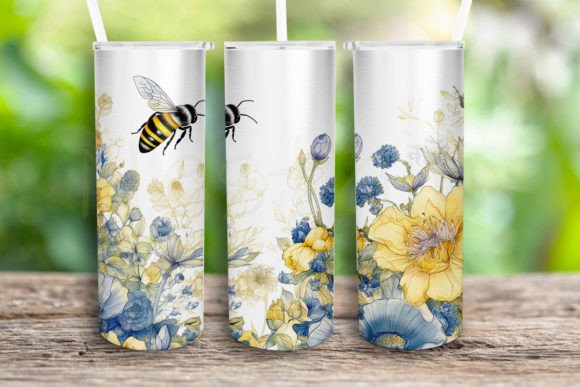
As a designer who’s stitched thousands of custom pieces—from boutique baby onesies to Etsy best-selling tote bags—I opened Watercolor Bees Wildflower Skinny PNG expecting charm. What I found was something more useful: quiet intentionality. This isn’t a busy, over-rendered motif. It’s a slender, organic silhouette—bees drifting among wildflowers—with soft watercolor edges and deliberate negative space. The “skinny” in the title isn’t marketing fluff; it’s an honest cue. At 9.3 x 8.2 inches and 300 DPI, it’s sized for impact without overwhelming, especially on narrower surfaces like apron straps, cap brims, or the side seam of a linen tea towel.
A Real Moment: Stitching It on a Linen Tote for a Local Botanical Shop
Last week, I prepped a batch of embroidered totes for a small herbal apothecary. Their branding leans earthy, unhurried, and hand-touched—not flashy or overly polished. I chose Watercolor Bees Wildflower Skinny PNG for the lower-left corner of a natural linen tote (12 oz weight, lightly textured). Why? Because its tapered shape mirrors the gentle curve of the bag’s side seam, and the watercolor softness complements raw linen without fighting it. Unlike tighter, vector-heavy bee motifs, this design breathes. When digitized for embroidery, that breathability translates into fewer dense fill-stitch zones and more strategic satin-stitch outlines—less risk of puckering, less need for heavy cutaway stabilizer.
Where It Shines—and Where It Asks for Thought
Watercolor Bees Wildflower Skinny PNG excels in projects where subtlety signals care: baby embroidery on gauzy cotton blankets, personalized sweatshirt cuffs for teachers, or delicate pillow covers for a nursery. Its lean profile makes it ideal for curved surfaces—think the front panel of a dad cap or the rounded edge of a ceramic mug sleeve (when used in printed mockups first). On dark fabric, the soft edges hold up beautifully if you stitch with matte cotton thread in warm taupe or sage—not stark white. On light fabric, it reads as gentle, not washed out.
But let’s be direct: this design isn’t built for tiny hoops or high-detail execution on stretchy knits. If you’re planning a machine embroidery design for a toddler’s ribbed onesie, test stitch density first—the fine stems and petal edges may need slight simplification to avoid thread breakage or fuzzy definition. Likewise, avoid placing it directly over seams or highly textured jacquard weaves unless you’ve paired it with medium-weight tear-away + light cutaway stabilizer. And while it’s lovely on woven cotton or linen, skip it for ultra-thin voile or slub-heavy burlap unless you’re willing to adjust underlay and reduce stitch count manually.
What It Does for Your Craft Business—Beyond Aesthetics
For Etsy sellers and small shop owners, Watercolor Bees Wildflower Skinny PNG quietly elevates perceived value. Customers don’t just see “a bee.” They sense intention: seasonal but not dated, nature-inspired but not cliché, handmade but professionally refined. That matters when pricing a $48 embroidered apron or a $32 holiday kitchen towel set. It also supports brand consistency—if your shop leans botanical, slow-living, or cottage-core, this design fits like a well-worn glove. No forced rebranding, no mismatched energy.
It also performs well in digital spaces. As a Graphics asset, it works cleanly in printable mockups—especially layered over neutral backdrops or subtle paper textures. I’ve used it in Instagram story templates for craft fair prep and as a watermark-free design asset in client pitch decks (always confirming commercial license terms first—more on that below). Its clean edges and lack of background mean zero clipping path headaches.
Practical Embroidery Designer Notes You’ll Actually Use
- Always test on scrap fabric first—especially with textured or dark substrates. Watercolor edges can shift in tone depending on thread sheen and fabric nap.
- Review stitch density before stitching. Since this is a PNG digit (not a pre-digitized embroidery file), you’ll need to convert it. Watch those thin flower stems—they’re beautiful visually but can vanish if filled too densely or stitched too fast.
- Confirm hoop size compatibility. Its dimensions suggest it fits comfortably in a 5x7 hoop—but verify once digitized, especially if adding underlay or border stitches.
- Inspect small details at actual stitch scale. Zoom in on your embroidery software: do the bee wings read clearly at 1/4 inch height? Does the taper end cleanly, or does it feather into ambiguity?
- Test in black-and-white mockups—this reveals contrast issues faster than color previews. Does the design still carry weight without hue?
- Use proper stabilizer: medium tear-away for stable wovens; cutaway + topping for knits or loosely woven linens.
- Check licensing before selling finished items. This listing is a PNG Digit—meaning it’s a source graphic, not a ready-to-stitch file. Confirm whether commercial use is permitted for both physical products and digital resale (e.g., as part of a craft bundle).
Bottom line? Watercolor Bees Wildflower Skinny PNG isn’t a trend-chasing flash-in-the-pan. It’s a thoughtful, adaptable Crafts asset—quiet enough for heirloom baby embroidery, resilient enough for small-batch apparel, and distinctive enough to help your handmade product stand out on a crowded shelf or scroll. It rewards attention, not speed. And in a world full of loud, over-digitized designs, that kind of restraint is rare—and genuinely useful.