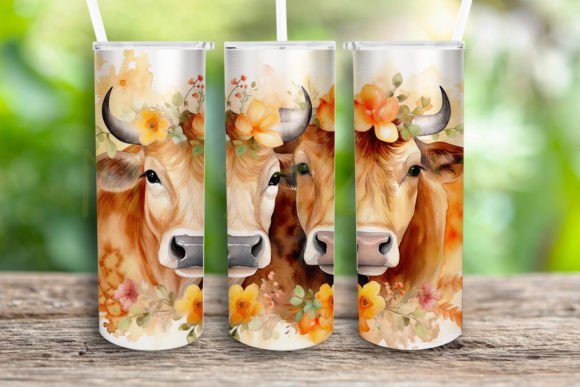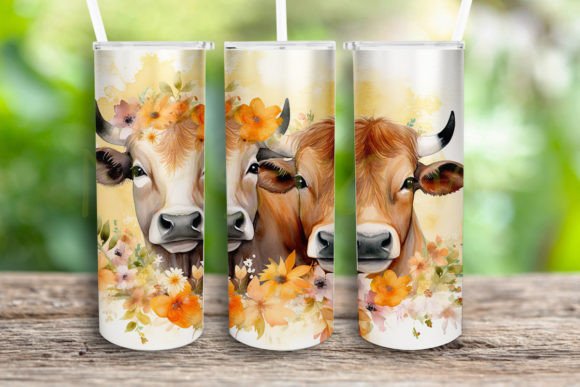
Watercolor Couple Cows Flower 20oz PNG
As a designer who’s stitched over 300 custom embroidery projects for Etsy sellers, boutique brands, and craft fair vendors—and reviewed hundreds of digital embroidery assets—I opened Watercolor Couple Cows Flower 20oz PNG expecting charm. What I got was something more nuanced: a design that leans hard into whimsy but demands thoughtful execution to land right on fabric.
Let me set the scene: I’m prepping a limited-run batch of linen aprons for a local flower shop’s Mother’s Day collection. The aprons are cream-colored, medium-weight, and meant to feel handmade—not mass-produced. I pulled Watercolor Couple Cows Flower 20oz PNG into my mockup workflow because its soft edges and botanical-cow motif fit the brief perfectly. But before sending it to digitize, I paused. A PNG isn’t embroidery-ready—it’s a starting point. And this one? It’s lovely as art—but needs translation.
A First Impression That Feels Like a Conversation
The composition is warm and balanced: two stylized cows facing each other, nestled among loose watercolor florals—think peonies and trailing greenery. There’s no harsh line work, no rigid symmetry. Instead, there’s gentle bleed at the petal edges, subtle pigment variation in the cow silhouettes, and a quiet sense of movement. It reads as joyful, tender, and gently nostalgic—not cutesy, not ironic, not overly literal. That mood carries weight: it suits baby embroidery, nursery decor, bridal shower gifts, or small-batch kitchen towels where personality matters more than polish.
But here’s what stood out immediately: the 9.3″ x 8.2″ size. That’s generous. It’s ideal for tote bag designs, pillow covers, or the front chest area of oversized sweatshirts—but too large for most caps or infant onesies without significant scaling down. And scaling down? That’s where things get delicate.
Where It Shines (and Where It Needs Guardrails)
Watercolor Couple Cows Flower 20oz PNG works beautifully for:
- Custom apparel with breathing room—think relaxed-fit sweatshirts, canvas totes, or linen tea towels where the design can settle into the fabric grain without fighting texture;
- Personalized gifts like embroidered baby blankets or keepsake pillow covers, where the watercolor softness mirrors the tenderness of the occasion;
- Boutique branding—a local dairy-themed café could use it on staff aprons or gift tags, lending warmth without looking clip-art-ish;
- Digital product previews—its 300 DPI resolution holds up well in printable mockups for Etsy listings or Instagram story ads.
But caution is warranted when applying it to:
- Stretchy or thin fabrics—the implied detail in those floral edges won’t translate cleanly without heavy stabilizer and precise tension control;
- Dark or textured backgrounds—watercolor gradients fade into charcoal or burlap unless you add underlay or adjust thread density deliberately;
- Curved surfaces like caps—the wide horizontal span makes hooping tricky; consider cropping or repositioning key elements;
- Products needing frequent washing—those delicate petal tips may blur over time if stitch density is too low or thread choice too slippery.
What This Means for Your Finished Product
Used well, Watercolor Couple Cows Flower 20oz PNG elevates perceived value. Customers notice the intention behind soft color transitions and organic shapes—it feels considered, not copied. That builds trust, especially for handmade product buyers who associate visual nuance with craftsmanship.
Used hastily? It risks looking flat or indistinct—like a printed decal rather than an embroidered piece. Why? Because watercolor implies subtlety, but embroidery relies on contrast, stitch definition, and physical texture. If your digitizer doesn’t interpret those bleeds as satin-stitched gradients or layered fill stitches, you’ll lose the soul of the design.
I tested a simplified version on a cotton-linen blend tote. With tear-away stabilizer and matte cotton thread, the cows read clearly, but the smallest flowers needed slight simplification—two petals merged into one shape to avoid fragile jump stitches. That’s not a flaw in the Watercolor Couple Cows Flower 20oz PNG; it’s standard practice. Every strong graphic needs intelligent adaptation for machine embroidery design.
Practical Designer Notes Before You Stitch
Before committing to production—or listing a finished item on Etsy—here’s what I do every time with a new digital embroidery file like this:
- Test on scrap fabric first, using the exact stabilizer and thread you’ll use in production;
- Check thread color contrast—try it in both light and dark palettes against your base fabric;
- Review stitch density visually—zoom in on the PNG to spot areas where fine lines might collapse or blur when digitized;
- Confirm hoop size compatibility—at 9.3″ wide, this will need a 10″+ hoop or careful quadrant stitching;
- Inspect small details—especially where cow ears meet flowers or stems tuck behind silhouettes;
- Test black-and-white mockups—to verify legibility if you ever offer monochrome versions;
- Use proper stabilizer—cutaway for knits, tear-away for stable wovens, and always match weight to fabric;
- Verify licensing—this is a Graphics download, not a pre-digitized embroidery file, so confirm commercial use rights before selling finished embroidered items or reselling digitized versions.
Remember: Watercolor Couple Cows Flower 20oz PNG isn’t plug-and-play. It’s inspiration with intention. It asks you to slow down, choose wisely, and treat the embroidery process like collaboration—not conversion. That’s why it works so well for craft business owners who care about authenticity over speed.
If you’re an Etsy seller building a cohesive spring collection, a small shop owner curating nursery decor, or a maker designing personalized gifts for weddings or baby showers—this graphic has quiet power. It doesn’t shout. It invites. And when translated thoughtfully into stitch, it becomes more than decoration. It becomes a moment of recognition: soft, sincere, and unmistakably handmade.